Business Sandesh Indian Newspaper | Articles | Opinion Pieces | Research Studies | Findings & News | Sandesh News
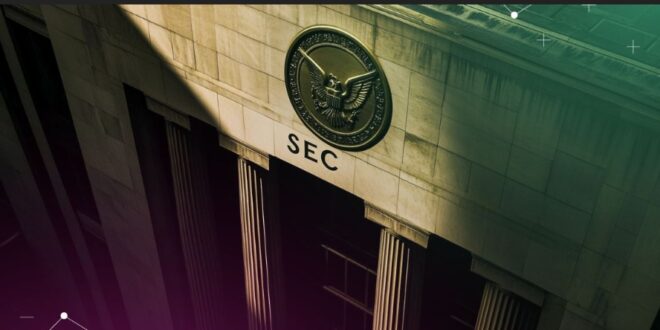
In a significant development for U.S. digital asset regulation, SEC Chairman Paul Atkins recently outlined a proposed “safe harbor” framework during remarks at the DC Blockchain Summit on March 17, 2026. This initiative aims to provide tailored exemptions and clearer pathways for crypto firms to raise capital and operate, marking a shift toward more innovation-friendly rules while preserving investor protections.
The proposal, part of a broader “Regulation Crypto Assets” vision, includes three key components:
– **Startup Exemption**: A time-limited registration exemption (up to four years in some descriptions) for early-stage projects, allowing limited fundraising (e.g., capped amounts like $5 million) and operational runway to reach maturity, with requirements for basic disclosures.
– **Fundraising Exemption**: Permits raising capital up to defined thresholds (e.g., $75 million in 12 months) under investment contracts involving crypto, exempt from full securities registration, subject to disclosures including financials.
– **Investment Contract Safe Harbor**: Offers certainty on when a token exits securities treatment—typically once the issuer permanently ceases essential managerial efforts tied to investor expectations, enabling decentralization.
This builds on a concurrent joint SEC-CFTC interpretive release classifying most crypto assets into non-securities categories (e.g., digital commodities, collectibles, tools, and certain stablecoins), with only tokenized traditional securities remaining under SEC oversight.
The crypto industry has long criticized prior rigid enforcement under the previous administration. Atkins’ approach addresses this by reducing uncertainty, fostering innovation, attracting investment, and encouraging compliance without immediate heavy burdens.
However, challenges persist, including risks to investor protection during exemption periods, complexities in defining eligibility and timelines, and the need for global alignment in a borderless market.
The proposal remains preliminary. Atkins indicated the SEC plans to release formal rulemaking for public comment soon, potentially requiring stakeholder input and possible legislative support.
Overall, this signals a balanced evolution in U.S. crypto policy—moving from enforcement-heavy tactics to structured exemptions that could enhance collaboration between regulators and the digital asset sector, potentially positioning the U.S. as a leader in responsible innovation.