Business Sandesh Indian Newspaper | Articles | Opinion Pieces | Research Studies | Findings & News | Sandesh News

The context for this article stems from a series of conversations and interactions with young entrepreneurs and executives. I realized to them the structural reforms of the 1990s were more of a seamless continuation of the earlier decades. To effectively communicate the major shift in concept, orientation and policy from the pre-reform period to the younger generation, we have to move away from a dry macroeconomic mode and incorporate an element of storytelling backed by honest, balanced data. Nostalgia of an egalitarian equitable society pre 1990 as against gross inequity now does resonate. The core message has to be that India did not trade a socialist utopia for a distorted capitalist system. Instead, the country has rather shifted from an era of enforced equality of poverty and privilege to an era of unequal wealth creation, reduction in absolute poverty and heightened aspirations. The complex reality of egalitarianism has to be revisited.
India of the pre-1990 India as a simpler, more equitable time is but to romanticize it. The fact is that the old system was deeply elitist, it just hid its inequality behind bureaucratic privilege rather than bank balances. We need to know the Story of “The Economy of VIP Privilege”. In pre-1990 India, if you didn’t have wealth, life could be statist. Even if wealth was there, to be comfortable, access to political connections or bureaucratic labyrinths was the route. Inequality wasn’t just about wealth; it was about access. And India still suffers from that syndrome. The syndrome of the spill over of License Raj, excessive regulation and an indifferent officialdom. As also a private sector which selectively still looks at managing the ecosystem by connections. For decades after independence, India’s economic landscape was defined by state control, deep mistrust of private enterprise, and a closed economy. The transition to a market-driven, globally integrated economy has transformed not just the GDP numbers, but the daily lives, aspirations, and opportunities of everyday citizens.
To recollect, the Fiat/Ambassador Car Story, to buy a car, a citizen had to deposit money and wait up to ten years for delivery. However, politicians, senior bureaucrats, generals and judges had a special “VIP Allocation Quota” to jump the queue. Then the Telephone, getting a landline telephone required a waiting list of 7 to 8 years. If an ordinary citizen had an emergency, they had to approach a local Member of Parliament (MP) for a “discretionary allotment.” Even getting a cooking gas (LPG) cylinder required a letter of recommendation from a government official. Two wheelers had a couple of years long waiting period, cement and iron and steel was not marketed but more rationed out. To emphasise, that wasn’t an egalitarian society; it was a feudal-bureaucratic society. The average citizen was powerless, and the elites largely controlled resources through permits, not merit. My own father, a serving General, had to bribe to obtain more cement for constructing his house. I have heard bureaucrats from that period recall the command and control with nostalgia.
The evolution of Inequality has to be assessed from the study of how the nature of inequality has changed. In the 1970s and 80s, India’s poverty rate hovered near 50 percent . Almost half the country was uniformly poor. The income share of the top 1 percent was historically low (around 6 percent to 10 percent), but that was because the government suppressed business growth, not because the poor were doing well. Today, absolute poverty stands at approximately 5.30 percent of the population, a drastic reduction. In terms of multidimensional poverty, 11.28 percent of the population is affected. Various studies do indicate that 248 million have escaped multidimensional poverty over a decade.
According to the findings from the World Inequality Report, India’s top 1 percent now holds over 22 percent of the national income and roughly 40 percent of the nation’s wealth. Youngsters however need to be aware about the difference between relative poverty and absolute poverty. The gap is certainly high but the absolute quality of life, access to healthcare, lifecycle choice, and financial mobility of a just below poverty citizen are vastly superior to what existed in the 1980s.
There certainly was a ceiling on entrepreneurship and industry in pre 1990 India. There were institutional roadblocks. The MRTP Act, high tax brackets (which once hit an absurd 97.75 percent) and FERA were designed to put a ceiling on how much wealth could be generated or on what could be produced in what quantity. The MRTP Act was designed to prevent the concentration of economic power, it effectively penalized businesses for growing large. Any company with assets over a certain small threshold faced immense restrictions on expansion, mergers, or new investments. The FERA, combated foreign exploitation and treated foreign exchange as a scarce national asset rather than a tool for trade. The License Raj (or Permit Raj) was a bureaucratic system where the government micro-managed the economy. If an entrepreneur wanted to start a business, expand an existing factory, or introduce a new product, they required multiple licenses from various ministries. It strangled innovation. Production quotas were fixed by bureaucrats, not consumer demand. Producing more than the licensed capacity was actually a criminal offense. This led to massive corruption, red tape, and monopolies.
My own maternal grandfather decided not to expand his business in view of the high taxes. There were many like him. Now entrepreneurship is encouraged to flourish, the focus is on lifting the poverty stricken and near poverty stricken through Digital Public Infrastructure (DPI) and varied subsidies. The human cost of the pre reforms period was reasonably severe, as when the economy grew at 3.5 percent, there was no surplus capital to invest in healthcare, education, or infrastructure. Poverty was managed through subsidies rather than through wealth creation and employment.
Innovation and a focus today has brought about a democratization of access, despite inequality, on a daily basis, the QR Code (UPI), banking is accessible, a street vendor has a digital footprint and presence in the banking system. Banking pre 1990, stayed high cost and credit was at a premium. Pre-1990, air travel was elitist, rail travel was basic largely, both sectors show remarkable turn arounds. As does telecommunication and access to communication technology. The “Startup” Mobility is a fact in terms of entrepreneurial energy, In the pre 1990 India, the dream was a secure government job or inheriting a family shop. Today, while fascination with government jobs remains but now a young person from a tier-2 city aspires to build a brand or business and generate wealth. Wealth is no longer strictly hereditary; it is increasingly driven by intellect and execution.
The honest takeaway for the youth is that India has largely traded the equality of stagnation for the inequalities of growth. Inequality cannot be defended, It requires better public education, robust healthcare, and fairer tax policies. But going back in time to a system of state-controlled scarcity is not the solution. Our goal is not to cap the generation of wealth but to open up opportunities, financial growth and business prospects. Younger generations often take choice, technology, and abundance for granted. Pre-1990 India was characterized by artificial scarcity created by government policy. This is the crux. The Hindu Rate of Growth, coined by economist Raj Krishna, this term disparagingly described the stagnant 3.5 percent average annual GDP growth India witnessed from the 1950s to the 1980s. With population growth hovering around 2 percent, per capita income grew only 1.5 percent annually. This slow growth meant the country could not generate enough wealth to lift its masses out of poverty.
Pre Reforms, The Reserve Bank of India (RBI) tightly regulated and administered every single interest rate. Commercial banks had no power to change them based on a customer’s profile or market competition. Interest rates were high, lending rates for businesses and personal credit routinely hovered around 16 percent to 20 percent. The government kept deposit rates high to encourage citizens to save money in banks, which the state then heavily borrowed to build public infrastructure. Obtaining a loan was rather problematic, especially for a vehicle or a house. A key part of the financial sector cleanup was the deregulation of interest rates. The RBI stepped back from micromanaging. It introduced policy benchmarks to manage inflation, but gave commercial banks the freedom to determine their own deposit and lending rates based on market demand, supply, and credit risk. The reforms allowed private-sector banks to enter as also an array of NBFCs. Over the decades, lending rates have reduced substantially. Today, home loans and student loans fluctuate between 8 percent to 11 percent depending on macroeconomic conditions—nearly half of what they were in the 1980s.
The economic reforms of 1991, which dismantled the License Raj, replaced FERA etc have fundamentally altered the nation. GDP growth rate fluctuates between 6 percent to 8 percent as against 3.5 percent earlier. Manufacturing, foreign exchange reserves and telecommunications services are radically different in volumes, growth and orientation. Manufacturing is now driven by global supply chains and a significant uptick. Steel output was 27 MT in 2001, now it is 151 MT, 4 million two wheelers were produced in 2001, as against 24 million now. Cement and cars are similar stories.
Pre-1990 consumption was defined by austerity and a lack of choice. Today, India is a consumer-driven economy with an exploding middle class. The culture has shifted from forced saving to a vibrant consumer market with immediate access to global brands, e-commerce etc. The biggest post-1991 miracle was the birth of the Indian IT and Business Services sector. Indian tech talent connected with global markets, transforming cities like Bengaluru, Hyderabad, Gurugram, and Pune into global tech hubs. This was followed by a massive boom in financial services, aviation, telecom, and hospitality.
The Real Concerns are Jobless Growth vs. Skill Mismatch, while GDP has increased, the creation of formal, paying manufacturing jobs hasn’t entirely kept pace with the millions of youth entering the workforce each year. The Agriculture trap exists, too large a percentage of the workforce remains dependent on agriculture, which contributes a relatively small percentage to the overall GDP. Moving workers from farms to high-productivity factory or service jobs remains a structural hurdle. The Gig Economy is a concern in that much of the modern job creation is in the informal or gig economy which lacks traditional social security benefits. Crony capitalism is a concern too.
The reality to convey to the younger generation is that India’s journey is not finished, but the baseline has fundamentally shifted. Pre-1990 India was an economy of stagnation and restriction; the present-day India is an economy of aspiration and global scale. The challenges of today are about managing growth, enhancing quality, and upgrading skills—a far better set of problems to solve than the subpar growth of the past.
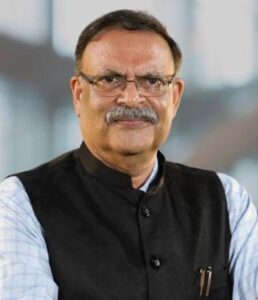
- Dinesh K Kapila
Chief General Manager, NABARD (Retd)