Business Sandesh Indian Newspaper | Articles | Opinion Pieces | Research Studies | Findings & News | Sandesh News
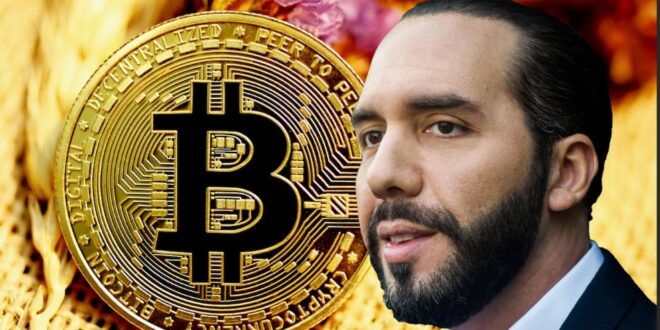
El Salvador’s President Nayib Bukele has achieved a record approval rating of 91.9%, according to a recent survey by local newspaper La Prensa Gráfica published in early February 2026. The poll, conducted January 19–25, 2026, among 1,200 respondents, showed 62.8% strongly approving of his performance, with only 1.8% strongly disapproving and 5.9% somewhat disapproving. This marks a rebound from mid-2025 levels around 85%, reinforcing Bukele’s position as one of the world’s most popular leaders despite international criticism.
The surge in support stems primarily from his aggressive anti-gang crackdown, which has dramatically reduced homicide rates and restored a sense of security for many citizens. Bukele’s hardline security policies, including mass arrests and prison expansions, remain the dominant factor in his enduring popularity, overshadowing other initiatives.
In stark contrast, El Salvador’s landmark Bitcoin experiment—making it legal tender in September 2021—continues to show limited domestic traction. The Chivo wallet rollout faced technical issues and low uptake, with daily use remaining marginal. Citizens largely prefer the U.S. dollar for transactions due to Bitcoin’s volatility, limited merchant acceptance, and lack of widespread understanding or education. Only 2.2% of survey respondents cited Bitcoin as Bukele’s biggest failure, and it was barely mentioned elsewhere in the poll, underscoring its peripheral role in public sentiment.
While the policy has boosted El Salvador’s global profile, attracted crypto tourism, investment, and businesses, and led to ongoing Bitcoin accumulation (with reserves reportedly reaching around 7,500 BTC by early 2026, valued at hundreds of millions), its economic impact on everyday Salvadorans has been minimal. Remittances, a key economic pillar, are still dominated by traditional channels, with crypto transfers negligible.
Analysts note that Bukele’s political strength derives from tangible security and infrastructure gains rather than cryptocurrency ambitions. Ongoing IMF negotiations have prompted some scaling back of Bitcoin mandates, though the government persists with daily purchases.
The divergence highlights that while Bukele’s leadership resonates deeply through crime reduction, his vision of El Salvador as a crypto hub has yet to deliver broad grassroots benefits. As adoption lags, the policy’s long-term viability hinges on demonstrating real economic advantages beyond symbolic or international appeal. For now, Bukele’s near-universal domestic backing remains robust, unaffected by the tepid Bitcoin response.