Business Sandesh Indian Newspaper | Articles | Opinion Pieces | Research Studies | Findings & News | Sandesh News
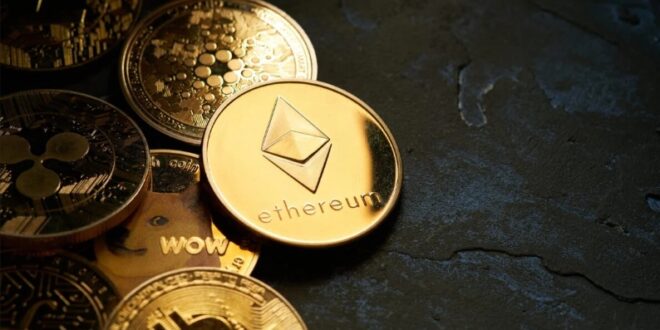
The cryptocurrency market is experiencing a notable downturn on January 19, 2026, with the total market capitalization declining roughly 3% to around $3.13–$3.21 trillion. Bitcoin (BTC) has slipped 2–3% to trade near $92,500–$93,000 (after dipping below $93,000 and briefly touching $92,000–$92,300), while Ethereum (ETH) fell about 3–4% to hover around $3,200. Altcoins, including Solana (SOL) down over 6%, XRP, and Dogecoin, posted sharper losses amid heightened volatility.
The primary catalyst is renewed geopolitical uncertainty stemming from U.S. President Donald Trump’s weekend announcement of new tariffs on eight European nations—Denmark, Norway, Sweden, France, Germany, the United Kingdom, the Netherlands, and Finland—linked to pressuring Denmark to sell Greenland to the U.S. The initial 10% tariff is set to begin February 1, 2026, escalating to 25% by June unless a deal is reached. European leaders have condemned the move as “blackmail,” with the EU preparing potential retaliatory tariffs on up to €93 billion ($101 billion) in U.S. goods.
This escalation sparked a classic risk-off rotation across global markets: investors fled high-risk assets like cryptocurrencies and equities, rotating into safe havens. Gold surged to record highs near $4,670–$4,700 per ounce, while silver climbed sharply. U.S. equity futures also tumbled, and the dollar weakened broadly as yen and Swiss franc gained.
The sell-off was amplified by cascading liquidations in the derivatives market, with over $800 million (some reports cite $860–$900 million) in positions wiped out in the past 24 hours, predominantly long liquidations as leveraged traders were forced out. Thinner liquidity—exacerbated by U.S. markets being closed for Martin Luther King Jr. Day—further magnified the move.
Additional pressures include retreating expectations for Federal Reserve rate cuts in March (following stronger U.S. economic data) and lingering uncertainty around crypto regulation, such as delays in the Clarity Act.
Despite the sharp correction, analysts describe it as largely technical and sentiment-driven rather than a structural breakdown. Institutional inflows into crypto products remain robust (e.g., CoinShares reported $2.17 billion last week), with Bitcoin viewed as resilient in the long term. The Fear & Greed Index sits at 44 (Fear), signaling caution but not extreme panic.
Volatility is likely to persist as markets monitor tariff developments and any de-escalation signals. Key supports to watch include BTC at $90,000–$92,000; a hold could pave the way for recovery toward $95,000+. While short-term headwinds dominate, broader fundamentals—like adoption and institutional interest—suggest this dip may prove temporary for patient investors.