Business Sandesh Indian Newspaper | Articles | Opinion Pieces | Research Studies | Findings & News | Sandesh News
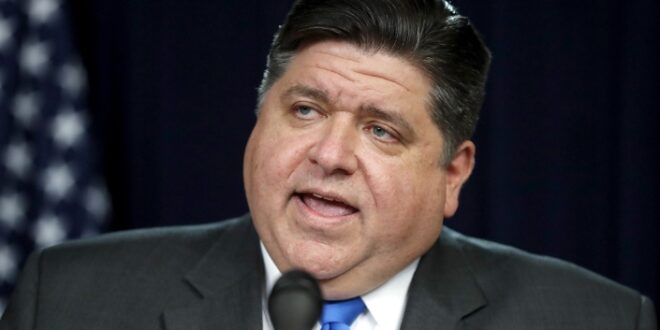
Illinois Governor J.B. Pritzker signed two landmark cryptocurrency bills—the Digital Assets and Consumer Protection Act (SB 1797) and Digital Asset Kiosk Act (SB 2319)—to bolster consumer protections amid rising crypto scams. Pritzker criticized President Donald Trump’s deregulatory stance, accusing him of letting “crypto bros” shape federal policy, per CoinTelegraph and Chicago Sun-Times.
New Crypto Regulations
SB 1797 mandates crypto exchanges to register with the Illinois Department of Financial and Professional Regulation (IDFPR), enforce anti-money laundering (AML) and Know Your Customer (KYC) protocols, and maintain robust cybersecurity. SB 2319 regulates crypto ATMs, capping new user transactions at $2,500 daily, limiting fees to 18%, and ensuring refunds for fraud victims. With $272 million lost to crypto scams in Illinois in 2024, these laws aim to curb fraud, ranking fifth nationwide, per FBI data.
Pritzker vs. Trump
Pritzker contrasted Illinois’ consumer-focused approach with Trump’s deregulation, notably his April 2025 repeal of an IRS rule overseeing DeFi brokers. “While Trump lets crypto bros write federal policy, Illinois is implementing common-sense protections,” Pritzker stated, emphasizing safeguards over speculation. This aligns with Illinois’ rejection of Trump’s GENIUS Act, which promotes crypto adoption, unlike Democratic-led states prioritizing regulation.
Industry and Political Divide
The laws, effective immediately with compliance deadlines by July 2027, have mixed reception. Coinbase opposed state-level rules, favoring federal oversight, while IDFPR Secretary Mario Treto Jr. hailed them as a “monumental victory” for transparency. Republicans in states like Texas push pro-crypto policies, highlighting a partisan split.
Illinois’ framework, the Midwest’s first, could inspire states like California, positioning it as a crypto regulation model. Investors gain safer markets, but startups face compliance costs. Pritzker’s stance signals a push for responsible innovation amid evolving federal policies.