Business Sandesh Indian Newspaper | Articles | Opinion Pieces | Research Studies | Findings & News | Sandesh News
The U.S. economy slowed sharply in the fourth quarter of 2025, expanding at an annualized rate of just 1.4%, according to the advance estimate released by the Bureau of Economic Analysis (BEA) on February 20, 2026. This marked a significant deceleration from the robust 4.4% growth in Q3, falling well below economists’ consensus forecast of 2.9–3.0%. For the full year, GDP grew 2.2%, down from 2.8% in 2024, reflecting challenges despite overall resilience.
A key culprit was the historic 43-day federal government shutdown from October 1 to November 12, 2025—the longest in U.S. history—which disrupted services and slashed federal spending by 5.1%, subtracting about 0.9 percentage points from Q4 growth. The impasse stemmed from disputes over funding bills, including ACA subsidies and spending priorities. Exports fell 0.9%, imports declined less sharply (-1.3%), and job creation weakened amid uneven recovery.
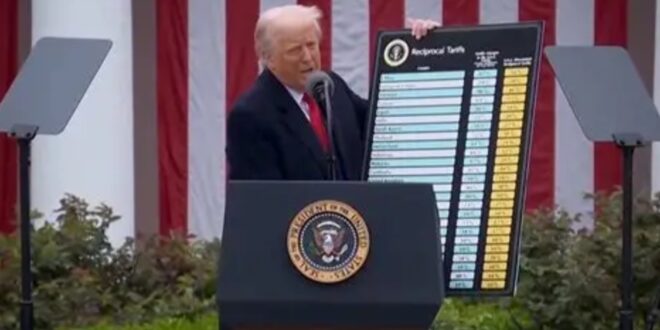
Hours before the release, President Donald Trump preemptively vented on Truth Social, blaming the “Democrat Shutdown” for costing “at least two points in GDP” and criticizing Fed Chair Jerome Powell while calling for lower interest rates. Critics questioned the timing, noting potential market sensitivities and Trump’s history of influencing economic narratives.
Despite headwinds, consumer spending rose 2.4% (down from 3.5%), driven by services (3.4%), while fixed investment accelerated to 2.6%, buoyed by intellectual property (7.4%) and equipment (3.2%). Inflation edged higher, with PCE at 2.9% (core 2.7%), above targets. Economists anticipate a Q1 2026 rebound, but warn of lingering political uncertainty, tariffs, immigration policies, and global factors complicating forecasts.