Business Sandesh Indian Newspaper | Articles | Opinion Pieces | Research Studies | Findings & News | Sandesh News
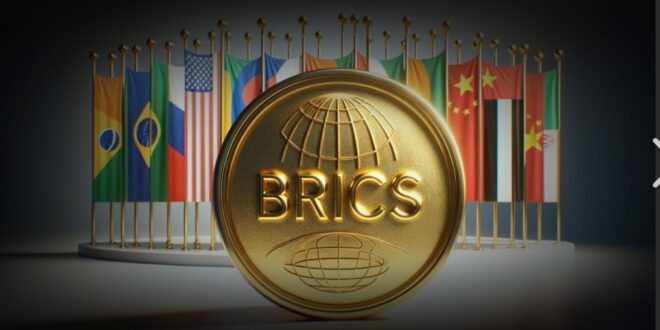
The Reserve Bank of India (RBI) has recommended that BRICS nations—Brazil, Russia, India, China, and South Africa—link their central bank digital currencies (CBDCs) to streamline cross-border trade and tourism payments, according to sources cited in Reuters reports on January 19, 2026. The proposal, if approved by the Indian government, would be formally presented for the first time at the 2026 BRICS summit, which India is set to host.
This initiative builds on the 2025 BRICS summit declaration in Rio de Janeiro, which emphasized greater interoperability among members’ payment systems to enhance transaction efficiency. By connecting CBDCs like India’s e-rupee, China’s digital yuan, and others, the network could enable direct, near real-time settlements in local digital currencies, bypassing traditional correspondent banking and SWIFT infrastructure.
**Key Potential Benefits**
– **Lower Costs**: Eliminating intermediary fees and foreign exchange conversions associated with dollar-based rails.
– **Faster Processing**: Instant or near-instant settlements to boost liquidity for trade and investment.
– **Improved Resilience**: Reduced exposure to U.S. dollar volatility and geopolitical risks, including sanctions, amid rising global tensions.
– **Enhanced Traceability**: Blockchain-based systems could improve compliance and reduce fraud risks.
The move aligns with broader BRICS efforts toward financial de-dollarization and multipolar payment alternatives, though officials stress it focuses on efficiency rather than fully replacing the dollar. India’s e-rupee, piloted since December 2022 with features like offline functionality, has seen growing adoption, positioning the country as a key driver.
**Challenges Ahead**
Analysts highlight significant hurdles: technical interoperability, governance standards, handling trade imbalances, monetary policy differences, cybersecurity, and regulatory alignment across jurisdictions. None of the core BRICS members has fully launched a retail CBDC yet—all remain in pilot stages—complicating rapid implementation.
This proposal reflects accelerating global interest in CBDCs for cross-border use, including projects like BIS-led mBridge (involving China, Hong Kong, Thailand, UAE, and Saudi Arabia). Discussions remain preliminary, with further exploration expected in upcoming BRICS meetings.
If advanced, a BRICS CBDC linkage could mark a pivotal step in reshaping emerging-market finance, fostering greater economic sovereignty while complementing existing systems.