Business Sandesh Indian Newspaper | Articles | Opinion Pieces | Research Studies | Findings & News | Sandesh News
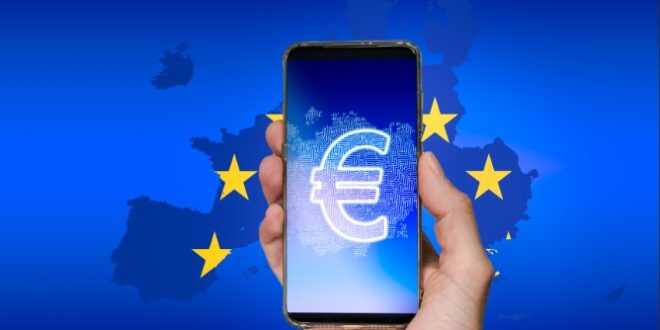
In a strategic maneuver to reclaim financial sovereignty, European Union finance ministers on September 19, 2025, forged a compromise roadmap for the digital euro, positioning it as a direct rival to U.S.-dominated payment giants like Visa and Mastercard. This pivotal agreement, hashed out in Copenhagen with ECB President Christine Lagarde, mandates ministerial input before any issuance decision, addressing fears of bank deposit flight while accelerating Europe’s push against dollar-centric systems.
The digital euro, a central bank digital currency (CBDC) under ECB oversight, promises instant, low-fee payments via electronic wallets—online, in-store, or offline—without the volatility of private cryptocurrencies. Unlike decentralized tokens, it ensures regulatory stability, with holding limits calibrated to safeguard commercial banks. ECB Chief Economist Philip Lane warns that unchecked U.S. stablecoins—98% dollar-pegged—risk “digital dollarization,” eroding eurozone monetary control and inflating cross-border fees that siphon billions from European economies.
This initiative amplifies the ECB’s preparation phase, launched in November 2023 and culminating in October 2025 with a rulebook draft, infrastructure tenders, and user pilots. Post-legislation—targeted for June 2026—full rollout could follow in 2.5 to three years, incorporating privacy tech like zero-knowledge proofs for GDPR compliance and offline resilience. Experts hail its potential for financial inclusion, enabling unbanked access via post offices and streamlining government payouts.
Yet, hurdles persist: Lawmakers decry privacy risks and implementation costs, while the ECB must harmonize with private innovations like euro-stablecoins. As global CBDC races intensify—China’s e-yuan already serves millions—this euro digital pivot could fortify Europe’s 20% share of world reserves, curbing U.S. financial leverage and fostering a multipolar monetary order.
If greenlit, the digital euro won’t just digitize cash; it could redefine global payments, empowering the bloc against extraterritorial sanctions and tech titans. In an era of de-dollarization whispers, Europe’s wallet is waking up—borderless, secure, and unapologetically sovereign.