Business Sandesh Indian Newspaper | Articles | Opinion Pieces | Research Studies | Findings & News | Sandesh News
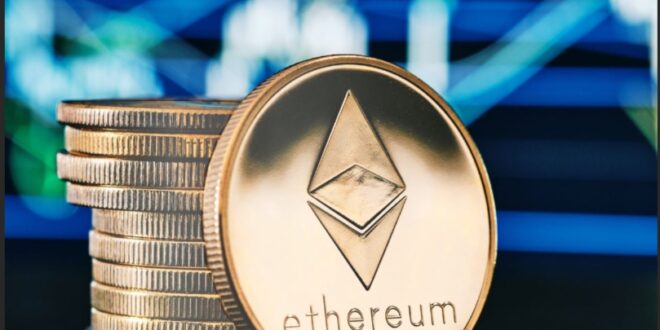
Ethereum developers are advancing toward Glamsterdam, the network’s next major hard fork, widely regarded as its most significant architectural advancement since The Merge in 2022 shifted consensus from proof-of-work to proof-of-stake.
Following the Pectra upgrade (May 2025, enhancing staking flexibility, account abstraction via EIP-7702, and L2 throughput) and Fusaka (December 3, 2025, introducing PeerDAS for efficient data availability sampling and blob scaling), Glamsterdam—slated for the first half of 2026 (likely Q2/Q3)—focuses on deepening Ethereum’s rollup-centric roadmap.
Core changes emphasize base-layer optimizations to support layer-2 networks, which now process the majority of user activity. Key proposals under discussion include enshrined proposer-builder separation (ePBS, e.g., EIP-7732) for fairer MEV distribution, block-level access lists (BALs, EIP-7928), general repricing mechanisms, and improvements to Layer-1 efficiency and censorship resistance.
The upgrade refines block construction, data propagation, and execution pathways, reducing mainnet congestion while bolstering Ethereum’s role as a secure settlement layer for rollups. This modular approach—L1 for security/data availability, L2s for high-throughput execution—aims to achieve sustainable ecosystem-wide throughput exceeding 100,000 TPS without sacrificing decentralization or security, addressing the blockchain trilemma.
Unlike consensus-altering upgrades like The Merge, Glamsterdam targets structural refinements to better integrate scaling solutions, enabling cheaper, faster transactions and smoother cross-L2 interactions.
Timelines remain fluid, with headliner EIPs still under review (some decisions expected in early 2026). Test implementations and dev discussions show promising efficiency gains, though complexity poses risks for an ecosystem securing billions in value and thousands of dApps.
Market watchers note historical upgrades often boost sentiment and activity. Glamsterdam builds momentum for later 2026’s Hegota (post-Glamsterdam, blending execution/consensus layers like Bogota/Heze), potentially including Verkle trees for lighter nodes.
Critics highlight execution challenges in such redesigns, but developers argue iterative, biannual upgrades (established post-2025) are essential to meet growing demand and maintain Ethereum’s edge in a competitive landscape.
As preparations intensify, Glamsterdam underscores Ethereum’s commitment to a scalable, resilient future centered on rollups.