Business Sandesh Indian Newspaper | Articles | Opinion Pieces | Research Studies | Findings & News | Sandesh News
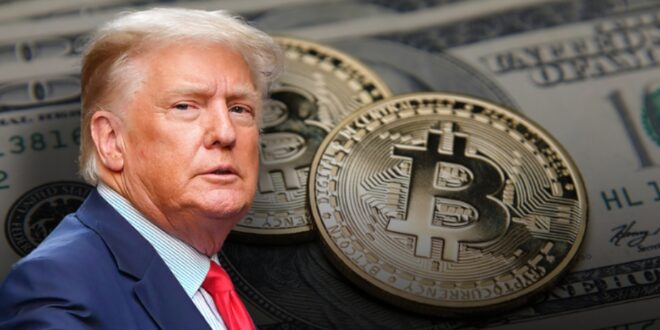
President Donald Trump’s weekend announcement of new tariffs on eight European nations—Denmark, Norway, Sweden, France, Germany, the United Kingdom, the Netherlands, and Finland—triggered a sharp risk-off move in global markets, including cryptocurrencies. The threats, tied to pressuring Denmark into selling Greenland to the U.S., imposed a 10% tariff starting February 1, 2026, escalating to 25% by June 1 unless a deal is reached.
The policy escalation wiped out approximately **$875 million** in crypto positions through liquidations within 24 hours, according to reports from platforms tracking derivatives data. Bitcoin (BTC) fell around 3%, briefly dipping below $92,000 from recent highs near $96,000–$97,000, while Ethereum (ETH) dropped about 4–5%, and altcoins like Solana (SOL) saw steeper declines of up to 8.6%. The broader crypto market capitalization declined roughly 2–3%, hovering around $3.15–$3.21 trillion amid heightened volatility.
Traders reacted swiftly to fears of renewed U.S.-Europe trade tensions, with a surge in long liquidations amplifying the downturn. Safe-haven assets surged—gold hit record highs near $4,700 per ounce, and silver climbed sharply—as investors fled riskier holdings. European stocks and U.S. equity futures also tumbled, underscoring crypto’s sensitivity to macroeconomic and geopolitical shocks despite its “digital gold” narrative.
European leaders condemned the move as “blackmail,” with the EU discussing potential retaliatory measures, further fueling uncertainty. Analysts note that while such pivots are often negotiation tactics, the immediate impact has been a classic risk-off rotation, with crypto bearing the brunt due to 24/7 trading and leverage.
Some observers view the correction as temporary, citing strong underlying fundamentals like institutional adoption. However, ongoing policy risks and potential escalation could prolong volatility. The episode reinforces how intertwined crypto has become with traditional global forces, challenging perceptions of full decoupling.
Markets remain on edge as details unfold, with traders monitoring for any de-escalation signals.